Search Term:
Your Ad Here
Showing posts with label technology news. Show all posts

Asus G73SW-A1 Gaming Laptop

New Asus G73SW-A1 Gaming Laptop
G73SW-A1 Asus gaming notebook with the latest Intel quad core processor is now in stock at Excaliber PC, while the 3D version of the same laptop – the G73SW-3RD – is available for pre-order.

The G73SW 3RD-A1 and features the Intel Core i7 CPU 2630QM, Nvidia GeForce GTX 460M video card 1.5GB, 8GB RAM, dual 500GB Hybrid HDD / SSD drives for 1TB, Blu-ray combo drive, full HD display LED backlighting, Windows 7 Home Premium operating system, one-click “overclocking functionality, and an F117 stealth bomber inspired design with a rubber mat.
Asustek 8-pound gaming machine sports an 8-cell battery, integrated stereo speakers and a subwoofer, TNX TruStudio audio technology, backlight keyboard, a 2 megapixel webcam with microphone, 802.11n Wi-Fi, Bluetooth, Gigabit LAN, three USB 2.0 and USB 3.0 port, HDMI and VGA outputs, and an 8-in-1 memory card reader. The 3D edition has a 120Hz screen like on Samsung 2233SW 21.5-Inch Monitor and includes 3D Vision 3D glasses. The Asus G73SW G73SW-3D-A1 and both come with a gaming mouse and backpack and are priced at $ 1,849 and $ 1,939 respectively.

Internet address warehouse empty


http://cdn.physorg.com/newman/gfx/news/ipv6.jpg
The global warehouse for Internet addresses ran empty on Thursday.
The non-profit Internet Corporation for Assigned Names and Numbers (ICANN) doled out its last five batches of "IP" numbers that identify destinations for digital traffic.
"A pool of more than four billion Internet addresses has been emptied this morning," ICANN chief Rod Beckstrom said at a Miami press conference.
"It is completely depleted. There are no more."
He brushed aside fears of modern life being devastated by an "IPocalypse," saying Regional Internet Registries (RIRs) worldwide will be doling out remaining addresses to support a shift to a bountiful new "IPv6" format.
"It is like running out of license plates," said Internet Architecture Board chairman Olaf Kolkman. "Driving on the road the next day would not change."
The touted solution to the problem is a switch to an "IPv6" format which allows trillions of Internet addresses, while the current IPv4 standard provides a meager four billion or so.
The effort and expense of changing to IPv6 would fall mostly on Internet service providers, websites and network operators that have to make sure systems can handle the new online addresses and properly route traffic.
"If an ISP (internet service provider) gets its act together, it shouldn't be a massive problem," Trefor Davies, chief operating officer of British ISP Timico, told AFP.
"We really should see this as an historic event," he continued. "The very nature of the Internet has changed with the transition."
Beckstrom expected the full switch to IPv6 to take years with potential overall costs in the billions of dollars, some of which could be factored into routine replacement of equipment.
"We are talking about billions of dollars here globally, not trillions of dollars," Beckstrom said.
Consumers, for the most part, should remain oblivious to the switch since complex IP numbers would still appear to them as words and domains, such as icann.org.
"My mother, my neighbor, my kids -- they should never notice," Kolkman said.
Some people might need to update routers or modems that connect computers to the Internet.
"All conditions are in place for a successful IPv6 transition," Beckstrom said. "The future of the Internet and the innovation it fosters lies within IPv6."
Registries could begin running out of IPv4 addresses as early as next year, according to US computer scientist Vint Cerf, who is revered as one of the "fathers of the Internet."
"Today's ICANN announcement marks a major milestone in the history of the Internet," Cerf said. "IPv6, the next chapter, is now under way."
ICANN has been calling for a change to IPv6 for years but websites and Internet service providers have been clinging to the old standard since the birth of the Internet.
With about seven billion people on the planet, the IPv4 protocol doesn't allow for everyone to have a gadget with its own online address.
The situation has been equated to not having enough telephone numbers for everyone.
The number of addresses that IPv6 allows for amounts to 340 "undecillion" (followed by 36 zeroes); enough for a trillion people to each be assigned trillions of IP numbers, according to Beckstrom.
IPv4 addresses were expected to run out first in Asia, where demand has been highest as people and businesses in emerging markets embrace online lifestyles.
Once RIRs run out of IPv4 addresses, they will turn to IPv6.
The formats have been likened to different languages, with translation needed for systems to handle both.
Computers and other gadgets that don't get the new format might have to start sharing instead of having unique identifying numbers.
"The Internet won't stop working; it will just slowly degrade," Google engineer Lorenzo Colitti said of not making the move to IPv6. "Things will get slower and flakier."
Google, Facebook and other major Internet players will add IPv6 addresses to their systems in a one-day trial run on June 8 to let all parties involved check for trouble spots.
"We need to kick the tires on it at a global scale and see if there are some unforeseen problems," Colitti said. "There is really a rallying cry element to it. No single player can do it alone; we need to work together."
World IPv6 Day will start at 0001 GMT on June 8.
Adoption of IPv6 is vital to preventing the Internet from becoming "balkanized" with localized addressing frameworks, according to Internet Society chief technology officer Leslie Daigle.

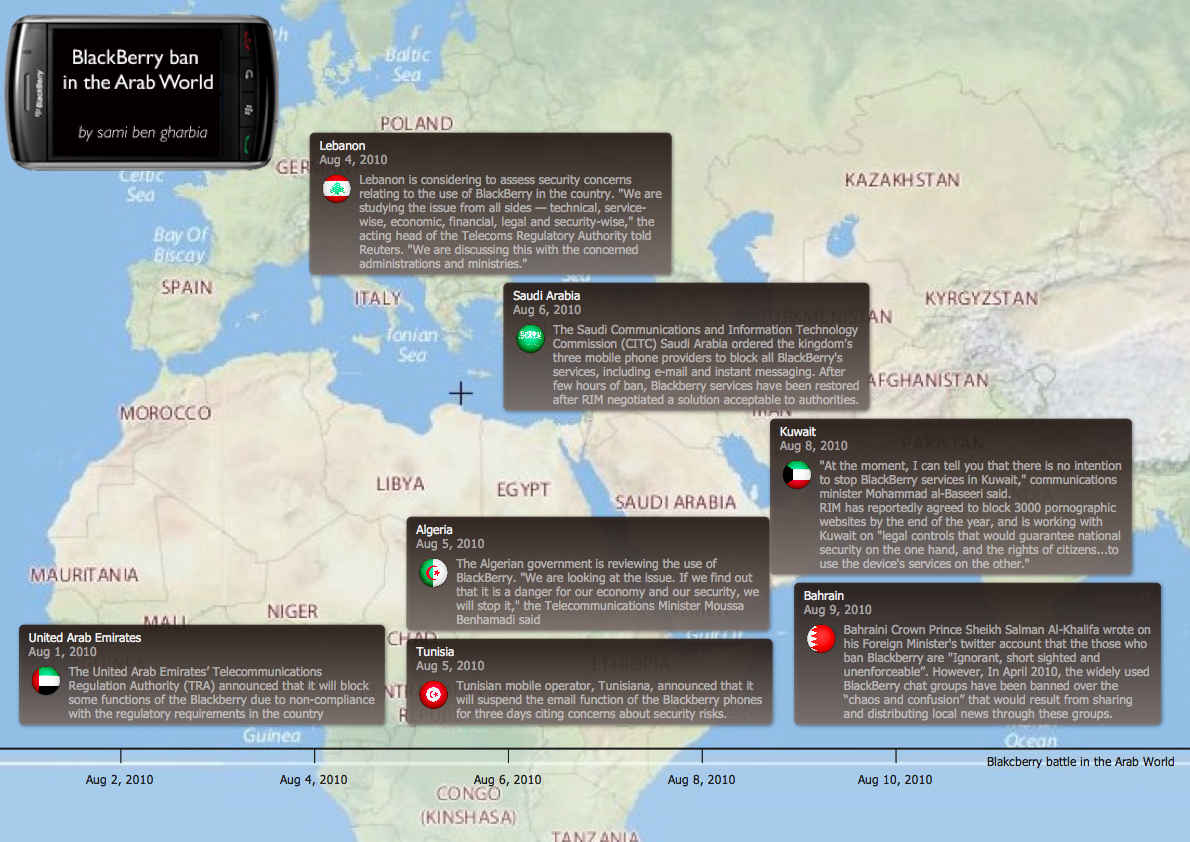
Internet technology is a tool for political change in Arab world

 http://ifikra.files.wordpress.com/2010/08/blackberry_ban_arab_world.png
The revolts in Tunisia, Egypt and Yemen are driven by deep dissatisfaction with authoritarian regimes, but Internet technology has played a crucial role as a 21st-century weapon for democracy movements, experts say.
http://asiancorrespondent.com/wp-content/uploads/2011/02/us-internet-map.jpg

Inspired by the recent overthrow of the Zine El Abidine Ben Ali dictatorship in Tunisia, citizen activists on Thursday escalated their protests in Egypt and Yemen, denouncing their respective governments. And social media played the dual role of a virtual town square where protest leaders rally the masses and counter government disinformation.
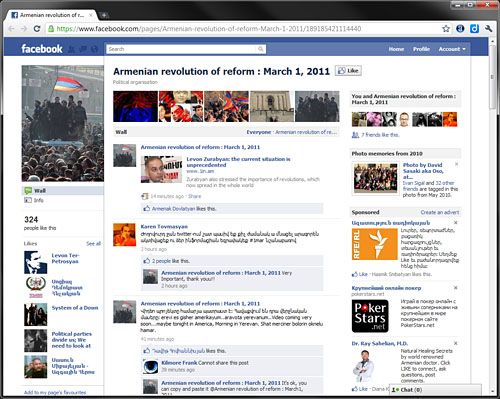
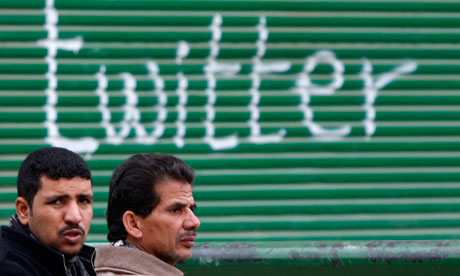
Services such as Twitter and Facebook are "playing an increasingly large role in almost any mass protest around the world," said John Palfrey, a law professor at Harvard University who studies limits on Internet expression. "We will see more of this."
 http://globalvoicesonline.org/wp-content/uploads/2011/02/faceook.jpg
The demonstrations in Egypt, where the government completely shut down the Internet late Thursday, "were started primarily by the April 6 Movement, which was basically a Facebook campaign that started in 2008 and called for protests about workers' rights," said Lina Khatib, a Stanford University expert on Arab reform who was in Cairo on Thursday before leaving for Paris.
During the latest unrest, Twitter became an instant information tool, she said: "People were spreading the news on Twitter. They would alert people where demonstrators were gathering."
But it is long-simmering anger against authoritarian governments that is sending
 unarmed protesters against police and soldiers."What has already happened in Tunis and may be happening right now in Cairo and Tripoli is a revolution that uses social media, but is not a revolution caused by social media," said Clay Shirky, a professor at New York University's Graduate Interactive Telecommunications Program.
Most of the Egyptian protesters have probably never used the Internet. But Internet-savvy elites were the catalyst for the demonstration, Khatib said.
"The reason why it was so effective is because of what happened in Tunisia," she said. "They saw it on TV. They heard about it. It was the first time a civilian uprising had torn down a regime in the Arab world."
Technology's role in organizing opposition has not been lost on the governments of that volatile region.
In Cairo, by late Thursday phone service was cut, Twitter and Facebook were blocked and a media blackout was in place, Khatib said. "The government knew people would be coordinating their movements to join the demonstration," she said.
Egypt is far from alone in seeing the Internet and other new technology as threats. The number of countries censoring or blocking at least some Internet content has increased from two about 10 years ago to three dozen now, Palfrey said.
http://www.foreignpolicy.com/files/fp_uploaded_images/100422_iStock_000002242947Small.jpg
Iran, for example, blocked access to Facebook for fear it was being used to help facilitate street protests over the disputed presidential election in 2009, and the Palo Alto company said it saw its traffic from Iran drop in half. The Chinese government, beginning with the 2008 Summer Olympics, began applying even more controls to the Internet. Facebook, Twitter and YouTube are blocked by the communist government.
Facebook said in a statement Thursday: "We are aware of reports of disruption to service and have seen a drop in traffic from Egypt." San Francisco-based Twitter, which did not comment directly on the blocking of its service, said in a tweet, "We believe that the open exchange of info & views benefits societies & helps govts better connect w/ their people."
The Obama administration has taken a more aggressive stance against Internet censorship than previous administrations, Palfrey said.
On Wednesday, U.S. Secretary of State Hillary Clinton urged Egypt "not to prevent peaceful protests or block communications, including on social media."
But the uprising in Egypt, a longtime ally of the United States, puts President Barack Obama in a tough situation, and it's unclear how much pressure he will ultimately apply on Egyptian President Hosni Mubarak, Khatib said.
http://api.ning.com/files/8tug*KtCql*RsFyFF57kFq8RmdPo*WcSSNEMUahjwrgO0ZzvYt-2FCoh-CYHl*KylqeNV9V9poHFzd81wknk5VswqnyMkvei/arab_world_today.jpg
"For the U.S., this is a test: Who do you really care about most?" she said. "The leaders in the Arab world, who are your allies, or the people who are calling for the same values you are supposed to represent?"
Jacob Appelbaum, a San Francisco programmer with the longtime open-source Tor Project, a program that cloaks the identity of users that is popular with corporations and free-speech activists alike, cautioned against "cyberutopia." The very technology used by democracy advocates can also be used to trap them, he said.
"The unblocking of Twitter may not be a good thing," Appelbaum said, unless protesters use a cloaking service. "It seems good on its face. But if the regime does not fall, it could hunt down everyone who uses Twitter."
 http://static.guim.co.uk/sys-images/Guardian/Pix/pictures/2011/2/22/1298407617013/Opposition-supporters-tal-007.jpg

Next Generation iPad (Slimmer, Anti-Reflective, 1.2GHz Dual Core CPU)


http://www.technologynews123.com/wp-content/uploads/2011/02/Dont-count-out-the-iPad-competitors-latest-technology-news-technology-news-latest-it-news-computer-technology-latest-gadgets-ipad.jpg
From past few months many speculations are made about the new features in the next iPad and today another analyst made its prediction about iPad 2.Analyst from Concord claims that iPad 2 will not have a higher resolution display or Retina display as many people are hoping that it would get retina display just like the other iPhone 4 and 4th generation iPad.

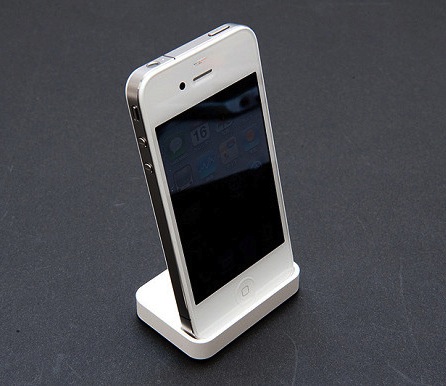
Steve Wozniak White iPhone 4 (Releasing Soon)

 http://images.macrumors.com/article/2011/01/31/132255-white_iphone_4_dock.jpg
If you remember the launch of the iPhone 4 , Apple was initially supposed to launch white iPhone 4 soon after the black version. But things got little bit trickier for Apple regarding the issues of white iPhone 4 as it was having problem with its production and about some months ago Apple had announced that there would be no iPhone 4 launch.

360° Omnidirectional Ultra-Portable Speakers for Mobile Devices


Razer-Ferox-carrying-case
Music enthusiasts and mobile gamers now have a huge reason to rejoice. Razer has recently launched their ultra-portable speaker system named Ferox. This pocket-bomb produces some of the best quality sound in it’s category, courtesy 30mm drivers. Ferox is very portable (70mm x 70mm x 53-64mm), but still it is powerful enough to be used as a mini subwoofer.
Razer-Ferox-2
Due to its aesthetic design, Ferox produces 360° omnidirectional sound and widens the sweet spot for all the listeners sitting around. Moreover, this speaker produces frequencies lying between 150Hz-20KHz, with it’s 2 loudspeakers giving an output of 3W each. This mini speaker connects itself via 3.5mm audio jack, making it compatible with most of the portable devices out there.
Razer-Ferox-1
Ferox comes pre-loaded with it’s own 470mAh rechargeable batteries which can run this little beast for as long as 12 hours. And yes, you can always know its battery status from the built-in LED indicator. To add to that, Razer ships these speakers with nice little carrying case.
This speaker can be yours for $59.99.

Best Web Designing Points


You might have a complete business model and the perfect plan. But business can’t run without a website. However, designing a website can be a Herculean task!

Beta 4 Firefox 4 For Android And Maemo

snap20110202_140246
It was more than a month ago that Mozilla had released the last update for Firefox 4 for mobile for both Android and Maemo. Until the last beta, Firefox 4 for Android more of a bloat ware than a decent third party browser.

The Mozilla Firefox team listened to all the feedbacks they got from the previous beta release and today, they released a new Beta of the app. The Beta 4 of Firefox for Android is now much, much better than the previous beta versions. The application boot up time has been heavily reduced and so has the page-load times. The Mozilla teams says that their benchmarks shows that this new beta of Firefox Mobile is faster than the stock Android browser in all the benchmarks they concluded.
On my Desire Z running on CM6.1.1 and OC’ed to 900MHz, Firefox Mobile did not seem to load pages faster than the stock Android browser. It was slower than the stock Android browser but not by a huge margin. Firefox Mobile was also not able to render some sites properly unlike the stock Android browser.
snap20110202_135940 snap20110202_140053

Performance wise, the stock Android browser is still way faster and smoother than Firefox 4. For me, the UI response and the overall speed of the Firefox 4 needs some improvements before it can replace the stock Android browser.
The APK of Firefox 4 is a whopping 13.5MB and after installation the app footprint increases to 30MB! This won’t go down well with people who are using Android phones with low internal memory. Thankfully, the app can be moved to SD card. One big advantage of Firefox 4 over the stock Android browser is the support for plug-ins. Right now, the Mobile Add-ons gallery for Firefox 4 features more than 100 useful plug-ins.
Hopefully, with the next beta of Firefox for Mobile most of these issues would be solved. Looks like we Android users will soon have a decent alternative to the stock Android browser.
Android owners can download Firefox 4 for Mobile from the Android Market.

In Pakistan 40PC import duty on telecom equipment

 http://www.ptclworkers.com/wp-content/uploads/2010/03/PTCL-logo.gif
Daily Times reports that the Central Board of Revenue has widthdrawn the 40 percent import duty imposed on telecom equipment.

In its latest Customs General Order 22/2006, the CBR had announced the removal of two telecom equipment from the list of other products that could be imported without paying a penny as duty, industry sources said.

Before this order only imports from China were considered duty free by CBR. Here are some interesting sections from the article that point to why only Chinese imports might have been allowed duty-free imports previously:
“It appeared that the government privileged the Chinese products on grounds that some of the Chinese companies are manufacturing telecom components locally and duty-free import would not hurt the local industry’s business scope.”
“Before the fresh order, only China’s ZTE remained the main beneficiary of the duty concession, which has been operating as vendor for the PTCL (Pakistan Telecommunication Company) for the past two years and fulfilling its almost all telecom equipment supply orders.”
“The PTCL has hired a Chinese firm to computerise its billing and customer care operations at a cost of Rs 1.8 billion almost a year ago,” said the source. “Under that contract, ZTE will be responsible to automate the whole system within 18 months and complete the task in accordance with international telecom standards.”
Web hosting